About
Prehistoric landscape of northern Dalmatia
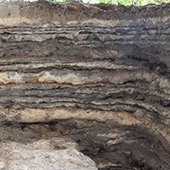
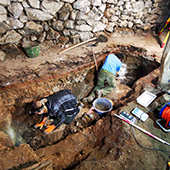
Border regions have often been overlooked in favour of more central areas. Their peripheral location has placed them at the margins of scholarly interest. Yet these regions were by no means isolated from the processes that shaped the core areas, quite the contrary. This raises an important question: have these regions always occupied a marginal position, or is their perceived marginality a modern construct? To address this question, the project adopts a multidisciplinary methodological framework, integrating approaches from several scientific disciplines with the ultimate aim of reconstructing the prehistoric landscape from an interdisciplinary perspective. The research focuses on four archaeological sites: Vlakno, Kozja peć, Pećina u Ždrilu, and Vaganačka pećina. Two are situated in the maritime border zone and two in the mountainous border region. Although these areas differ considerably in their geomorphological and environmental characteristics, they share a common feature: both have traditionally been regarded as peripheral. The selected sites were chosen because they preserve well-developed chronological sequences and rich, continuous stratigraphic records spanning multiple periods of prehistory, with no evidence of significant hiatuses. Such continuous archaeological archives are absent from the central study area. Using these sites as case studies, the project will investigate the dynamic interactions between prehistoric human communities and their environments.